Categories
resource

Compassion: The Heart of Education

By Marcia Mota-Kerby, Educational Psychologist

Every day, educators are navigating social and emotional complexities, supporting children’s wellbeing, fostering inclusion, and responding to diverse needs within ever-changing contexts. Schools are not only spaces of learning but also places of safety, belonging, and emotional support for pupils and their families. Within this dynamic landscape, compassion is not an option – it is a necessity. It is an internal motivational process that can transform the school culture, restore connection, and strengthen communities from within.


What Is Compassion?

Compassion, as defined by the psychologist Paul Gilbert (2019) is “a sensitivity to suffering in self and others, with a commitment to try to alleviate and prevent it.”

It involves two key components:

  1. Engagement – noticing and tuning in to distress (in ourselves or others).
  2. Action – taking wise, supportive steps to help reduce that distress.

Unlike empathy, which focuses on recognising and connecting with another person’s emotions, compassion adds the motivation to help. It engages courage, wisdom, and emotional regulation, skills that can be developed individually and collectively.


The Flows of Compassion

In Gilbert’s model, compassion exists in three interconnected flows, each are essential for wellbeing:

  1. Compassion for Others – our ability to notice when someone else is struggling and to respond with care and understanding.
  2. Compassion from Others – our capacity to accept care and support when we are struggling.
  3. Self-Compassion – how we respond to ourselves during challenging moments, whether triggered by external events (like a specific incident), internal experiences (such as emotions, thoughts, or feelings), or a sense of personal failure. 

In a school context, these flows form a dynamic network that shapes the emotional health and wellbeing of the entire school community.

  • When teachers offer compassion to students – by listening, adapting, or holding space for mistakes – they help pupils overcome challenges, low self-confidence, shame and self-criticism, and develop trust.
  • When staff receive compassion from colleagues and leaders – through empathy, care, and shared understanding, they are better able to sustain their own wellbeing.
  • When individuals practise self-compassion, they can recover more effectively from setbacks and maintain perspective in challenging situations

A compassionate school culture nurtures all three flows, recognising that everyone, students, teachers, leaders, and families, needs both to give and receive compassion to flourish.


Why Compassion Matters in Schools

A growing body of evidence demonstrates that compassion is not merely a moral ideal but a scientifically supported approach that enhances wellbeing and learning across educational contexts. 

  • Neuroscientific research shows that compassion engages neural systems linked to soothing, caregiving, and affiliation, mechanisms that help balance the brain’s stress and threat responses (Klimecki et al., 2013; Lutz, Greischar, & Davidson, 2004). In essence, compassion activates the very systems that foster emotional regulation, safety, and connection. For schools, this has powerful implications: when both staff and pupils experience a sense of psychological safety and belonging, the conditions for learning, curiosity, creativity, and motivation naturally thrive.
  • Research by Kristin Neff (2003) and Christopher Germer (2018) shows that self-compassion reduces anxiety, promotes resilience, and helps individuals cope and recover from challenges, essential qualities in both teaching and learning. Similarly, Jennings and Greenberg (2009) found that educators who cultivate emotional awareness and compassion create classrooms with lower stress levels, better relationships, and improved student outcomes.
  • From an organisational perspective, Huppert and So (2013) identified compassion and empathy as core components of psychological wellbeing in schools, while Roeser et al. (2013) demonstrated that teachers trained in mindfulness and compassion-based practices experience less emotional exhaustion and greater professional efficacy.

Ultimately, compassion is not an “add-on”; it is the foundation of a psychologically safe, inclusive, and healthy-performing school culture.


If compassion is embedded into school life, what does this look like?

  • Classrooms that emphasise connection before correction – where behaviour is understood as communication and where mistakes are treated as learning opportunities.
  • Leadership teams that model emotional openness, support staff wellbeing, and promote shared reflection.
  • Policies and procedures grounded in fairness and understanding, balancing accountability with empathy. Compassion in education thrives when supported by clear expectations and healthy boundaries, enabling care that is empathetic, balanced, and sustainable for both staff and students.
  • Staffrooms where colleagues check in on one another, and vulnerability is met with care and kindness.
  • Children and young people who feel safe, seen, and valued.

Embedding compassion throughout school life lays the foundation for a more relational and responsive approach, one that aligns naturally with the principles of humanisation in education.


Humanisation in Education: From Systems to Relationships

To humanise school services means putting relationships, understanding, and empathy at the centre of how we work with children, families, and colleagues. It involves recognising that behaviour, emotions, learning, and wellbeing are interconnected, and that behind every challenge lies a story and a narrative that deserves to be understood.

In a compassionate school, systems are designed to support people rather than manage problems. Humanisation starts with a shift in mindset: moving from “What’s wrong with this child?” to “What’s happened to this child?”, and ultimately to “What does this person need to feel safe, connected, and ready to learn?” 

When schools embrace this approach, every layer of the organisation, from classroom practice to leadership decision-making, begins to reflect compassion in action:

  • Inclusive and relational support systems prioritise the child’s context and voice, recognising that progress depends as much on belonging and trust as on academic targets (Roffey, 2016).
  • Pastoral and behaviour policies emphasise repair over punishment, using restorative conversations and emotion coaching to help pupils learn from difficulties and build resilience (McCluskey et al., 2019).
  • Staff wellbeing structures create psychologically safe spaces for reflection, supervision, and peer support, acknowledging that educators cannot pour from an empty cup (Herman et al., 2020).
  • Partnerships with families are grounded in listening, empathy, and collaboration, strengthening community trust and shared responsibility for children’s wellbeing.
  • Leadership practices model compassion through transparency, curiosity, and care, valuing people’s emotions and experiences alongside performance indicators (Seligman, 2011; Roffey, 2021).

When services are humanised, schools evolve from systems of compliance into communities of care. Interactions become grounded in respect, acceptance, fostering trust and cooperation. In such environments, children feel safe to learn, teachers feel empowered to teach, and relationships not routines, form the heartbeat of the school.


Cultivating Compassion: A Call to Action

Cultivating compassion is not about adding another initiative to an already full plate, it is about changing the plate itself. It begins with small acts: taking a moment to listen, to pause before responding, to cultivate a non-judgmental approach, and assume positive intent. Over time, these micro-moments form the foundation of a compassionate culture.

Developing compassion is a skill. It requires intentional practice: slowing down, listening deeply, and responding with care even when time is short. Schools can nurture this through:

  • Staff training in compassion focused and values-based approaches. Building awareness of one’s own emotions and responses enables educators to remain calm, and grounded, especially under pressure. 
  • Reflective supervision and peer support. Providing regular spaces for staff to reflect on challenging situations helps normalise and validate emotional responses within an intrapersonal context, reduce isolation, and strengthen professional resilience.
  • Curriculum initiatives that teach empathy, perspective-taking, and emotional literacy. Embedding compassion-based learning into PSHE, citizenship, and pastoral care encourages students to understand and manage emotions constructively.
  • Leadership that promotes values and connection as much as compliance and outcomes.Compassionate leadership models openness, listens actively, and ensures that wellbeing is woven into school development priorities.

Compassion is courage in action. And when it flows through every level of a school, it truly becomes a superpower, one capable of transforming education from the inside out.

Categories
resource

Imagination & Autism: Insights from EP Research

Exploring Imaginary Worlds in Autistic Children and Young People

Dr Kate Boyle’s doctoral research explores how autistic children and young people (CYP) experience Imaginary Companions (ICs) and Paracosms; complex and persistent imaginary worlds.

Psychological Background

Historically, autism has been associated with impaired imagination, a view rooted in early cognitive psychology and diagnostic frameworks. Influential theories such as:

  • Theory of Mind (Baron-Cohen, 1995),
  • Social Motivation Theory (Dawson et al., 2005),
  • and Sustained Imagination Theory (Harris, 2000)

have contributed to deficit-based narratives. These theories often overlook the private, creative, and emotionally rich inner worlds of autistic CYP. Qualitative research into autistic children and young people’s imaginary friends and paracosms has never been undertaken before so it is a new and exciting area of research.

Kate’s research aligns with a growing movement in autism studies that prioritises neurodiversity, participatory methods, and strength-based approaches. Kate worked with autistic researchers for support with the design of the study which helped significantly in ensuring her participants were able to truly participate.

What Are ICs and Paracosms?

  • Imaginary Companions (ICs): Invisible friends or personified objects that have been found to support emotional regulation, creativity, and social connection in typically developing children and young people.
  • Paracosms: Elaborate, persistent imaginary worlds revisited over time, often involving storytelling, role-play, and symbolic meaning. Paracosms have not been researched much at all.

These forms of play reflect complex cognitive and emotional processes, including:

  • Self-soothing and emotional regulation
  • Perspective-taking and empathy
  • Creative problem-solving
  • Identity exploration

Key Findings from the Thesis Research

With just 8 participants we discovered over 100 ICs, 6 paracosms, and 18 personified objects.

Four core psychological themes emerged:

Control

Imaginary worlds offer predictability and autonomy which is especially important for CYP who may experience sensory or social unpredictability in daily life.

“It felt normal to me… I had control over it all.”

Connection

ICs provide companionship and reduce feelings of isolation, especially in contexts where social relationships may be challenging.

“Because I’ve got my imaginary friends, I never feel alone.”

Learning

Imaginary play mirrors real-life experiences, allowing CYP to process medical, emotional, or social situations through symbolic representation.

“I’ve got the same [medical needs]… so I help my dollies.”

Wellbeing

Imaginary worlds serve as emotional sanctuaries, helping CYP regulate anxiety, agitation, and stress.

“When I go into my imaginary world… I feel better.”


Why This Matters for Schools

Autistic CYP are often perceived as having limited imagination or creativity. This assumption can shape how we interpret their behaviour, plan interventions and engage with their interests. Kate’s research shows that:

  • Autistic CYP can engage in rich imaginative play
  • These experiences are emotionally meaningful, supporting wellbeing, learning and social connection
  • Imaginary play can be a protective factor, helping CYP manage anxiety, loneliness and unpredictability

Understanding this helps school staff:

  • Recognise imaginative play as a strength, not a symptom or deficit
  • Use imaginative content to build rapport and understand emotional needs
  • Avoid misinterpreting imaginative behaviours as signs of withdrawal or avoidance

This research reinforces a neurodiversity-affirming approach to education and psychology. Autistic CYP are not all lacking in imagination, while some may struggle in this area this research provides key evidence that some autistic CYP are able to engage in one of the most complex forms of imaginary play in childhood, suggesting significant strength in imagination rather than weakness.

 “It [my imaginary world] wasn’t unknown…I had control over it all.”

This quote from an 11-year old participant reflects how engaging with their paracosm can offer emotional safety, autonomy and empowerment – core needs for all children and especially for those navigating a neurotypical world.

Implications for Practice in Schools

This research invites educators to reframe imaginative play in autistic CYP as a strength rather than a deficit. Here’s how you can apply these insights:

  • Ask about imaginary friends/worlds during pupil voice activities or wellbeing check-ins
  • Engage with imaginative play as a window into emotional needs and coping strategies
  • Use imaginative themes to support transitions, social stories, or therapeutic interventions
  • Challenge outdated narratives about autism and creativity in staff training and policy
  • Promote inclusive research and practice by valuing CYP’s lived experiences

Final Thought

Autistic children and young people in this research have been found to engage in the most complex forms of imaginative play, yet the research base overlooks this and focuses on differences and deficits. This is indicative of a wider research and societal problem in which autistic people are studied as subjects to understand impairments and differences in relation to typically developing people. Kate’s work highlights a serious gap in research, likely related to past research not being accessible for autistic individuals, and a powerful opportunity for schools to support autistic CYP in ways that are creative, compassionate, and evidence-informed.

How Can Educational Psychologists (EPs) Support?

EPs are well-placed to support schools in applying these insights:

  • Promote strength-based approaches to autism that value creativity and individualism
  • Model inclusive pupil voice practices, using imaginative play as a tool for engagement
  • Support staff training on autism and neurodiversity-affirming language and approaches
  • Facilitate reflective spaces for staff to explore how imaginative play can inform understanding of CYP’s internal worlds
  • Design interventions that incorporate imaginative elements (e.g., narrative therapy, story-based social skills work)
  • Advocate for participatory research and practice, ensuring autistic CYP are co-creators of their support plans

Kate is in the process of getting her exciting research published in an academic journal. Please do reach out if you would like to discuss her thesis research with her and what it helped us learn. 


Interested for more?

Watch Kate speak about her research on this episode of EP Reach Out.

Categories
resource

How to Use Restorative Justice

What is Restorative Justice

If you consider the question, “What are we trying to teach young people when we discipline them?” you are likely to come up with responses like: accepting responsibility, discouraging the behaviour, developing empathy and self-regulation. 

Restorative Justice (RJ) is a relational approach to addressing harm and conflict that supports all of the answers above. Rather than focusing on punishment, RJ emphasizes repairing relationships, understanding perspectives, and restoring trust. 

A few key principles

  • The focus is on: what happened; the effect of actions and words; the consequences of behaviour.
  • The victim’s needs are considered whilst the perpetrator can repair harm without shame.
  • The move towards resolution comes from the pupils themselves.

How to Use Restorative Justice

RJ can be used in schools through a range of practices, from informal conversations to structured conferences.  Although further training is needed to carry out RJ conferences there are 5 key RJ questions that can be easily used in any situation where harm has been caused by a playground altercation to a show of defiance in the classroom: 

#1: What happened?

Example:

  • Tell me in your words what happened

#2: What were you thinking?

Examples:

  • What was going through your mind when you did this?​
  • What was the purpose of doing that?​
  • What did you think would happen? 

#3: What were you feeling?

Examples:

  • How did you feel when you did this (using an emotion wheel)?​
  • What emotions did you feel when you did this?
  • How did your body feel when you did this?

#4: Who has been affected?

Examples:

  • What do you think he/she felt?​
  • What do you think that was like for X? ​
  • Who has been hurt?​ 

#5: How can we put things right?

Examples:

  • What has changed for you hearing/thinking about how X feels
  • How can we make things better?​
  • How would you like for things to be different?
  • How can we achieve this?​
  • What will you do differently next time?​
  • Who can help you?​

What might this look like?

A child has repeatedly refused your instructions to stop pushing another student in the line.  You take this child out of the line and quietly ask the following questions, waiting for their responses.

  • Can you explain to me what just happened whilst you were standing in the line?
  • What did you think the other child would do when that happened?
  • What did you think might have happened if you carried on?
  • What emotions do you think could describe how you felt just then?  Were you excited or angry about something?
  • How do you think the other child felt as you were doing that?  What do you think that was like for them?
  • Shall we think about what we could do to make things better?
  • What could you do differently next time we line up?

Notice that this conversation doesn’t include the word ‘why’.  Often the word ‘why’ places blame at someone’s door and expects the child to explain themselves leading to a ‘he said’,  ‘she said’ scenario or a feeling of unfairness.  These questions avoid blame whilst exploring both people’s feelings.  How do you think the child would respond differently if you had used ‘why’ instead of asking these questions?


Why It Works

RJ is effective because it aligns with how young people learn and develop emotionally and socially.

  • Supports brain development and emotional regulation.
  • Encourages emotional connection and empathy.
  • Avoids a culture of fear and promotes openness.

Evidence has shown that RJ reduces exclusions, improves behaviour, and strengthens relationships.  It has also been found to support young people who act impulsively by modelling executive functioning and planning on how to approach a problematic situation. 


Does it work?

Restorative justice has a long and rich history and its creation is often attributed to Maori people in New Zealand and Indigenous people of Canada and USA.  These communities used systems based on the same values as RJ for hundreds of years to protect individual and promote social stability.  

To review the effectiveness of RJ in schools in current times a systematic review of many studies found that RJ can decrease exclusions, improved school climates, increased happiness and improved relationships between students and between students and teachers (Lodi, Perrrella, Lepri, Scarpa and Patrizi, 2021).


Implementation Tips:

  • Create safe spaces for dialogue.  Remove the CYP out of ear shot of other CYP or take them out of the classroom. 
  • Use restorative language consistently this helps CYP get used to the questions and overtime they will become better at answering them without so much prompting from you. 
  • Model respectful communication in your tone of voice, the volume, your body language and how calmly you approach the situation.
Categories
resource

Systemic Tools for Transformational Teaching

Reflective Thinking and Supervision

In education, no teacher works in isolation. Every classroom interaction, policy decision, and professional conversation is part of a larger, interconnected system. When we view teaching through a systemic lens, reflective thinking and supervision become not just personal tools for growth – but essential levers for whole-school transformation and wellbeing.

Seeing the Bigger Picture: What Is a Systemic Lens?

Systemic theory invites us to see schools as living systems – complex, dynamic, and deeply relational. Every teacher, student, leader, and policy is part of a web of influence. Change in one part of the system affects the whole.

“Like a kaleidoscope, transformational leaders must constantly shift their perspective, allowing their identity, lived experience, and theoretical understanding to create dynamic patterns of possibility.”
Ziegenfuss, Evans & Girman, 2025

With that in mind, we advocate that reflective thinking and supervision, when grounded in systemic principles, can help school staff:

  • Shift from reactive to responsive practice.
  • Understand how their actions ripple through the system.
  • Recognise patterns, not just isolated events.

Reflective Thinking as a Systemic Practice

Reflection is more than self-evaluation—it’s a curious stance towards oneself and the systems around them

“I have no special talents, I am only passionately curious”
Albert Einstein 

Teachers who reflect systemically ask:

  • How do my beliefs shape my interactions?
  • What patterns do I notice in student behaviour or outcomes?
  • How does my role connect to wider school goals or community needs?

Systemic reflection encourages teachers to move beyond individual lessons and consider:

  • Relational dynamics (e.g., power, communication, inclusion)
  • Cultural narratives (e.g., equity, identity, belonging)
  • Structural influences (e.g., policies, timetables, assessment systems)

Supervision as a Systemic Support Structure

Supervision, when viewed systemically, is not about oversight—it’s about co-creating meaning and direction.

It becomes a space where educators and leaders explore:

  • How their work aligns with the school’s mission.
  • How systemic pressures (e.g., accountability, funding, trauma) impact practice.
  • How to sustain wellbeing while navigating complexity.

“Supervision should be a conversation, not a critique.”
Stephen Gordon

Systemic supervision fosters:

  • Shared responsibility: Everyone contributes to the health of the system.
  • Collective insight: Patterns and blind spots are surfaced together.
  • Adaptive capacity: Teachers become more agile and resilient in the face of change.


Wellbeing and Burnout: A Systemic Concern

Burnout isn’t just an individual issue—it’s a systemic signal. When teachers are overwhelmed, it often reflects deeper misalignments in the system: unrealistic expectations, lack of voice, or disconnection from purpose. This can affect anyone working with the education system and especially those who care for others and hold leadership responsibility. 

Reflective practice and supervision help staff:

  • Name and normalize emotional experiences.
  • Reconnect with their values and agency.
  • Shift from isolation to interdependence.

“You can’t pour from an empty cup. Take care of yourself first.”
Unknown

Schools that embed systemic reflection and supervision report:

  • Lower burnout and attrition.
  • Stronger professional identity.
  • Greater alignment between personal and organisational value


From Reflection to Transformation

Systemic change doesn’t happen through top-down mandates—it grows from reflective, relational, and responsive practice. When teachers reflect systemically and engage in meaningful supervision, they become agents of transformation—not just in their classrooms, but across the whole school ecosystem.


Practical Tips for Systemic Reflection and Supervision

  • Use systems maps: Visualise how your role and those you supervise connect to others. Where in the system can you see opportunities/ constraints when supporting staff with ‘stuckness’? 
  • Ask systemic questions: What patterns am I part of? What stories are shaping this situation? Who else is affected by this problem? If this problem was not here
  • Create reflective teams: Share insights across phases/ departments or roles and build staff’s capacity to create multiple perspectives in a situation. This leads to creativity in solution finding.  
  • Design supervision for dialogue: Focus on meaning-making, not just performance.
  • Link wellbeing to systems: Reflect on how structures support or hinder your staff’s energy and purpose.

Supervision & Reflective Practice

TRAINING & SUPPORT FOR SCHOOLS

Are you looking to enhance the professional development of your staff? Our tailored training programme on supervision and reflective spaces will help educators thrive by improving their practice, fostering collaboration and promoting well-being.

What We Offer:

  • Wellbeing Focus – Foster a culture of support, reflection, and resilience within your school community.
  • Supervision Skills – Learn how to provide effective supervision that supports both individual and team development. 
  • Reflective Practice – Explore techniques for creating reflective spaces where staff can engage in deep learning and growth.

Package Details:

  • Training Duration: 
    2 days of in person training at the WPDC
    (23 Sept & 21 Oct 2025) 
  • Implementation support: 
    Access to group supervision
    (4 sessions of half-termly supervision 1.5 hrs in Nov 2025, Jan, Mar and May 2026) 
  • Cost: 
    £300 pp 
    (or £250 pp discounted price for two or more participants from each setting)
Categories
resource

Supporting Students with SEMH Needs

Students with Social, Emotional and Mental Health (SEMH) needs are among the most vulnerable in our school communities. They are disproportionately represented in exclusion statistics and their needs are often misunderstood.

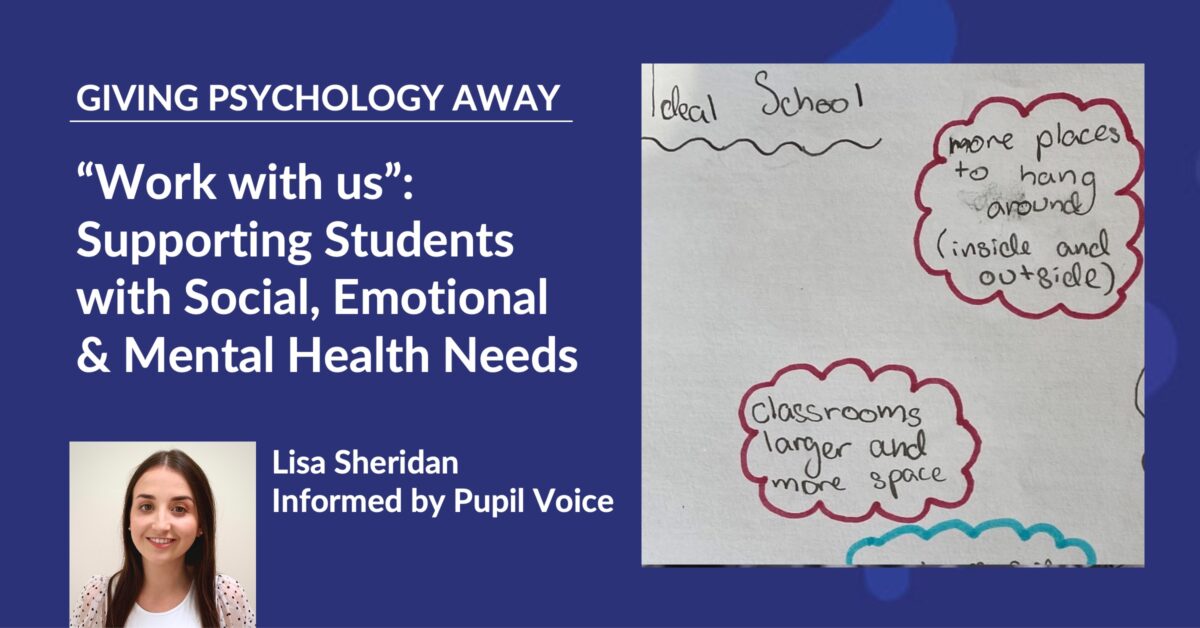
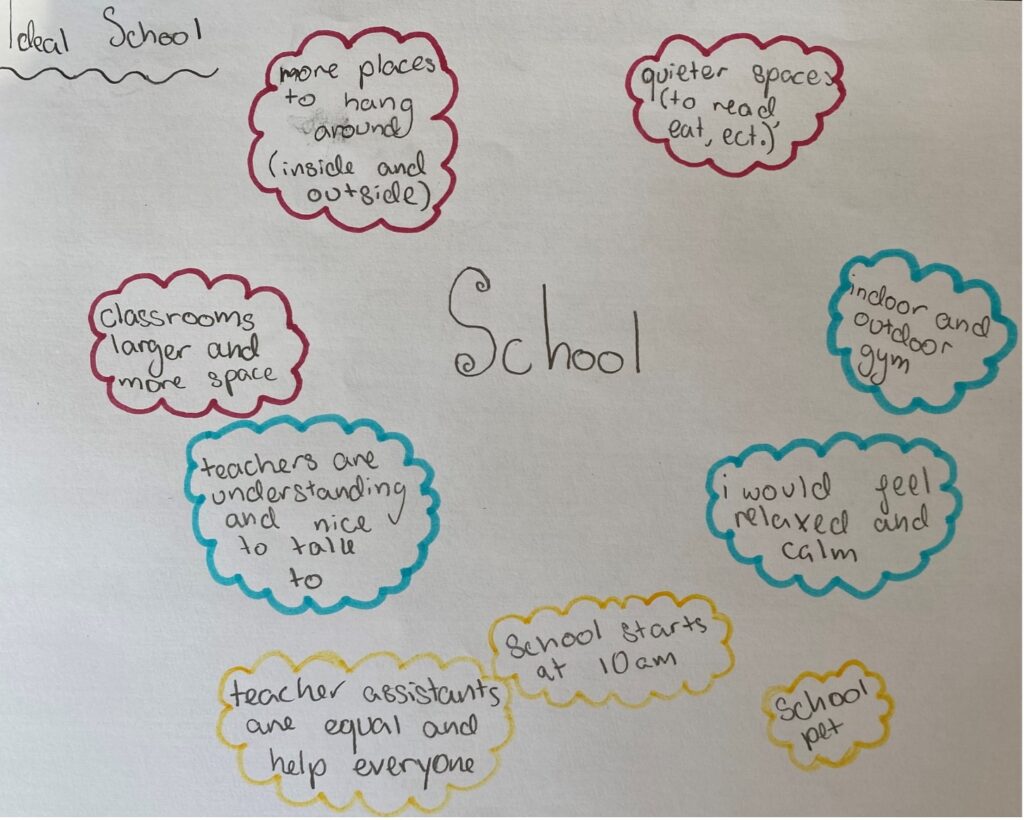
When we take the time to listen to these students and promote their voice, we can uncover insightful strategies come from the students themselves. This article shares findings from a ‘Pupil Voice Project’ that captured the voices of 13 secondary students with SEMH needs, using participatory research methods and focus groups, across three secondary schools who shared what helps them thrive in school.

Their insights, grounded in psychological theory and best practice, can offer powerful and practical guidance for support.


Background


Research highlights students with SEMH needs struggle with trust, emotional regulation, and belonging. These challenges are often compounded in school systems. It is understandable that can teachers feel overwhelmed when faced with complex behaviour or emotional outbursts. But drawing on both psychological frameworks and the lived experiences and views of the students themselves, can support our understanding of supportive strategies.

Understanding Through Psychology

  • Attachment and Trauma-Informed Approaches 
    Many students with SEMH needs have experienced disrupted attachments or trauma. Feeling safe and seen at school is essential. Teachers can act as secure bases, building trust through consistency and relational approaches.

  • Self-Determination Theory 
    Autonomy, competence, and relatedness are key for motivation and wellbeing. When students feel they have choice, feel capable, and feel connected, they engage more. 

  • Ecological Systems Theory 
    SEMH support must be holistic, involving collaboration between school, families, and wider systems. Whole-school ethos matters just as much as individual interventions.

  • Pupil Voice in Practice 
    Despite their insights, pupils with SEMH needs are often the least heard. Yet research shows when we do listen, we uncover rich knowledge that improves practice and empowers students.

What Pupils Told Us (and What It Means for Practice):

1. Time for Relationships

“Teachers expect you to automatically trust them and tell them everything”

At the heart of effective support is a strong, trusting relationship. Pupils emphasised the importance of friendships for belonging, as well as adults taking time to understand them and the importance of mutual respect. Consistency, curiosity, and small gestures, like greeting students by name or checking in, can build the trust that’s essential for engagement.

2. Safe Spaces and Time to Regulate 

“When I have my head down, I don’t want to have a chat” 

“Take me out of lessons and talk to me”

Many students need time and space to process emotions and language. Quiet areas, sensory spaces, or simply being allowed to step out of class can help them regulate. These strategies should be seen as part of emotional support, not as rewards or avoidance.

3. Movement and Practical Strategies 

“Walking around helps”

Physical movement helps with concentration and regulation. Opportunities for movement breaks, physical activities, or alternative seating can support attention and behaviour. Simple tools like fidget items or access to clubs can also make a significant difference.

4. Individualised and Flexible Support 

“Giving more time to write stuff down”

Students value when their specific needs are recognised and accommodated. Adjustments like extra processing time, breaking down instructions, or use of assistive technology make learning more accessible.

5. Autonomy, Motivation and Choice 

Pupils want to feel a sense of control over their learning and school experience. Providing meaningful choices, such as where to sit, how to approach tasks, or selecting subjects, supports autonomy, self-esteem and engagement. Involving students in reward systems or goal setting can boost motivation.

6. Practical, Interactive Learning 

“Looking at a whiteboard all day doesn’t help”

Students with SEMH needs respond well to hands-on and real-life learning that connects with their interests and future aspirations. Group work, practical tasks, and use of technology were all valued.

7. Nurturing, Relational Approach

“We should be motivated and encouraged to do the right thing”

Students respond best when staff show empathy and seek to understand the roots of their behaviour rather than relying on punitive responses. Nurture-based approaches, emotional literacy support, and consistent encouragement help them make positive choices and feel safe to take risks in learning.

Conclusion.

The perspectives shared by the students align strongly with what research and psychology advocate for: relationships, trust, autonomy, flexibility, and a move toward relational, trauma-informed approaches, which are essential for meaningful engagement and wellbeing. When we listen to what the students tell us, we not only strengthen our practice, but we also empower young people to feel seen, valued, and capable of thriving in school.

Categories
resource

Understanding Self-Harm

What is self-harm?

Self-harm is a behaviour that is done to deliberately harm oneself. Self-harm is more commonly used as a way of managing difficult emotions, by helping to regulate intense feelings.

The Addictive Model of Self-Harming Behaviour (Non-Suicidal and Suicidal) 

How do I talk about self-harm?

Talking about self-harm can feel hard and create difficult feelings and worries. Research tells us that talking about self-harm does not put the idea into their head. In fact, it creates a safe space for them to be open and honest about how they feel and provide them with a safe person to turn to.

To do this, you should:

  • Provide a safe and confidential space/environment.
  • Listen and explain the limits to confidentiality.
  • Reassure the child or young person that their feelings are important and valid, and it may help to talk about them.
  • Tell the young person how courageous they are to be talking about difficult thoughts and feelings.
  • Stay calm and always provide an empathic and non-judgemental approach. 
  • Use the https://www.richmond.gov.uk/portus/files/professionals-risk-assessment.pdf to help you understand the context of the behaviour and to help you make an informed decision about next steps.
  • Check in with them regularly to make sure the support offered is making a difference.

What questions could I ask?

  • How are things for you right now?
  • Can you say what’s bothering you? 
  • What might help you? 
  • What would you like to happen next?

How do I respond to self-harm?

If you have serious and immediate concerns regarding the safety or a child or young person due to self-harm or suicidal ideation, contact the emergency services on 999 or the Mental Health Trust 24/7 crisis line on 080 0028 800.

Refer to the Self-Harm and Suicide Prevention Pathway to help you and your colleagues to make decisions about the support required: Children and Young People’s Self-harm and Suicide Prevention Pathway.

It is important to ensure parent’s and carer’s are involved in this process unless there are safeguarding concerns relating to the young person’s family. 

As young people should be attending an educational setting on a regular basis, schools and colleges are also well placed to support anyone who is facing emotional distress.

Are they at risk of suicide?

While self-harm is relatively common in young people, suicide is rare. Although some people who self-harm may experience suicidal thoughts, this is often not the case. Suicides are uncommon in childhood and early adolescence, but risk increases in the late teens and continues to rise into early adulthood.

The following steps can help you find out if a child or young person is thinking about suicide. 

Ask directly.
Use the word suicide. ‘Are you thinking about suicide?’ Practice asking first if this helps. It may give you more confidence.

Stay calm.
This is important as the child or young person may be looking at how you react to decide how much they should tell you.

If you are unsure of how to start the conversation, contact the Papyrus helpline HOPELINEUK on 0800 068 4141. Papyrus’ specially trained advisers can talk you through what to say and how to support the child or young person during this conversation. 

Talking with a child or young person about suicide can be very difficult. If you need support following your conversation, Papyrus’ advisers are on hand to de-brief with you and help you to process what has been said and where to go next.

If the child or young person says that they have had, or are currently experiencing, suicidal thoughts, you should create a personalised plan to help keep them safe: Suicide Prevention Support and Safety Plan.

Additional resources 

Categories
resource

Attention Deficit Hyperactivity Disorder (ADHD)

ADHD is a common, lifelong neurodevelopmental disorder characterized by a persistent pattern of inattention and/or hyperactivity-impulsivity that interferes with functioning or development.

Depending on the presentation, there are different subtypes of ADHD namely:

  1. Inattentive Subtype (previously known as ADD): 20-30%
  2. Hyperactive-Impulsive Subtype: 15%
  3. Combined Subtype: 50-75%

As an area of neuro-diversity, ADHD can co-exist with other areas of neurodiversity such as dysgraphia, developmental coordination disorder, and a large overlap with autism (25-40%). Individuals with ADHD can also present with depression and anxiety, possibly as a result of unmet needs and difficulty adjusting to environments that cater for neurotypical children.


ADHD and Executive Functioning

Executive Functions: Executive functions are cognitive processes that help us plan, focus attention, remember instructions, and manage multiple tasks. They are primarily located in the prefrontal regions of the frontal lobe and involve multiple connections to other brain regions.

Key Executive Functions Affected by ADHD:

  1. Working Memory: The ability to hold and manipulate information over short periods.
  2. Sustained Attention: The capacity to maintain focus on a task or activity over a prolonged period.
  3. Organization: The skill to arrange thoughts, materials, and tasks in a structured manner.
  4. Response Inhibition: The ability to control impulses and resist distractions.
  5. Emotional Control: The capacity to manage emotions and respond appropriately to situations.
  6. Time Management: The skill to plan and allocate time effectively.
  7. Planning and Prioritizing: The ability to set goals, plan steps to achieve them, and prioritize tasks.
  8. Task Initiation: The ability to begin tasks promptly and efficiently.
  9. Goal-Directed Persistence: The capacity to stay focused on a goal despite obstacles and distractions.

Impact of ADHD on Executive Functions:

People with ADHD often experience a delay in the development of executive functions, making them more likely to act based on short-term rather than long-term goals. ADHD can lead to impairments in one or more executive functions, affecting memory, planning, emotional regulation, and social skills.

Supporting children with their executive function skills, as well as the impact of the environment on their capacity to keep up with school life, is a key area of our EP role and a prerequisite for the child’s overall academic progress and emotional wellbeing.


7 x top tips for schools to consider are:

Learning Environment:
Minimise distractions, use visual aids, allow movement breaks, and provide a quiet space.

Teaching Strategies:
Provide clear instructions, break tasks into manageable chunks, use visual cues, and incorporate meaningful movement.

Emotion coaching:
Remain calm, connect before correcting, use redirection, avoid arguing, and provide feedback on the skills observed and what else the child needs to be doing. Be specific! 

Whole School Approach: 
Provide a structured environment, positive reinforcement, psychoeducation, and support for parents.

Interventions: 
Provide young people with a space to understand themselves and their emotions. Where you may need to support social skills, please consider the language used to ensure we are not asking individual students to mask or reject aspects of their identity. Supporting memory and executive functions through play and games may be an ideal way to support development in a non-threatening or tiring for children way. 

ADHD bodies may require additional sensory processing support such as mindfulness and body scans. It would be ideal to create a bank of regulatory strategies with the child so they feel part of the process and develop their capacity for self awareness and self-regulation. Adults need to model this by thinking out loud “the energy in your body tells me that perhaps we need to…”

Strengths-Based Understanding of ADHD:
It is important to recognise and celebrate strengths such as creativity, energy, enthusiasm, and resilience. Children with ADHD can present with hyper focus on areas they are interested in so utilising this to promote other skills may be an ideal way to turn their ADHD into a superpower! 

ADHD and Trauma:
We are mindful that childhood trauma and children being in a chronic high alert state can also create presentations very similar to ADHD. Many children with trauma end up receiving a diagnosis of ADHD and EPs are often involved in conversations with schools to support staff in considering appropriate and trauma informed ways to support children with hyperactivity, organisational difficulties and emotional regulation challenges.

Categories
resource

Support with Exam Anxiety

What is Exam Anxiety?

Exam anxiety is an intense feeling of stress or pressure related to taking exams. Children and young people who are experiencing exam anxiety may exhibit some of the following symptoms: 

Exam anxiety is common and a normal response to the stress of exams but too much anxiety can impact the ability of children and young people to learn and retain information, and interfere with studying and revision.  

Source: https://www.psychologytools.com/self-help/anxiety


Why do we experience Exam Anxiety?

Some common reasons why children and young people might feel exam anxiety include:

  • Fear of Failure: This may stem from high expectations, negative past experiences and/or concerns about the consequences of failing that lead to intense pressure to perform well. 
  • Not Feeling Prepared: This could be due to poor time management or ineffective study or revision techniques. 
  • High Stakes: Important exams such GCSEs and A-Levels can increase anxiety due to their significant impact (e.g. not getting the entry requirements for a specific course). 
  •  Lack of Confidence: This could include negative perceptions and self-doubt about their abilities and negative self-talk (e.g. “I’m going to fail.”)

How can we support Exam Anxiety?

Children and young people can find exams a lot to cope with, but there are ways that we can support them to improve their wellbeing during this time.


1. Foster a Supportive Environment: Create a classroom environment that encourages open discussion about exam anxiety and stress. Through this open discussion children or young people will feel able to seek help if needed and supported.

2. Encourage Positive Self-Talk:  Help students identify and challenge negative thoughts about their abilities and the exam outcome. Encourage them to rethink these negative thoughts these with positive affirmations and rational thoughts. This is known as ‘reframing’ thoughts. Examples of reframing thoughts include:

I’m so anxious in exams, my mind always goes blank” can be reframed to “I am confident that I can manage any difficulties that might occur during the exam

If I don’t get the highest grade on this exam I’m a failure” can be reframed to “The result of this exam does not define my abilities or worth

3. Listen and Normalise anxiety:  Listen to the child or young person about their concerns to validate their emotions. Reassure them that feeling anxious because of exams is common and can be a normal response to stress. This reassurance can help reduce feelings of isolation in someone experiencing anxiety.

4. Promote Healthy Habits: Educate the importance of regular sleep, healthy eating, and physical activity during revision and exam seasons. These factors can significantly impact children and young people’s ability to manage stress, improve general wellbeing and perform at their best during exams.

5. Model Calm Behaviour: As adults we can demonstrate calm and confident behaviour towards exams. The child or young person’s perceptions of a situation can be influenced by your attitudes and reactions therefore having a positive impact on how they view exams. Use positive language such as, “You have worked hard and are more than ready to take this exam”.

6. Promote Relaxation and Mindfulness Techniques: In order to help students manage their physical responses to anxiety, you can teach them: 

7. Manage Procrastination and Avoidance Behaviours. Exam anxiety often drives procrastination as a temporary relief but ends up promoting greater anxiety. Strategies such as breaking down revision into manageable chunks, prioritising tasks, encouraging progress checking and celebrating small successes can help. 

Categories
resource

Understanding the systems around a child

Child development does not take place in a vacuum, instead, the context around the child impacts their actions and development. Schools are uniquely placed to influence children’s development due to their key role in their lives and the time spent at school. 

One way of viewing child development is through the Bioecological Model of Human Development (Bronfenbrenner & Morris, 2007). This model considers the impact of social contexts, structural conditions and political factors on children’s school experiences and the role they play in mediating their development (Bronfenbrenner & Evans, 2000). It highlights the importance of the environmental factors around a child that influence their development from those closest to them (family, teachers) to more indirect factors (government education policies).

Bioecological Model of Human Development

The Bioecological Model is marked by four key aspects: process, person, context, and time (Tudge et al., 2022).

  • Process – this focuses on the interactions between people and their environment, which take place over time. Some examples that are relevant to school include CYP and staff relationships or interactions, staff training and teaching
  • Person – this relates to the individual child and further details are included in the diagram below.
  • Context – this describes four interrelated systems that mark the environments that influence development and are further explained below. 
  • Time – this relates to changes in the environment throughout the child’s lifetime, for instance, changing cultural attitudes, historical events, and life transitions like moving abroad.
Figure 1 – Diagram showing the person and context aspects of the Model

Cultural context

This relates to broader societal attitudes and ideologies, e.g., cultural norms, and societal views of education.

Greater environment 

This relates to aspects that indirectly influence the child’s development e.g., what is happening within the school more broadly, or in their parents’ workplace.

Interactions and connections

This layer considers the interactions that happen within the child’s immediate environment, e.g., relationships between parents and school, and relationships between the child and their teachers.

Immediate environment

This is the first layer around the child and relates to aspects that have direct contact with them and influence their day-to-day life, e.g., home life, school environment and peers. 

Child

This includes their individual characteristics, e.g., age, ethnicity or other features that affect how others view or treat them. Also, their psychological resources along with their skills, experiences, and individual motivations that influence their responses to situations.

How can the Bioecological Model be applied in school settings?

This Model is flexible and provides a way of thinking about how individual traits and surrounding environmental factors influence and interact with one another as part of an ongoing process of child development.

The example below shows how the Model has been applied in the case of a Year 6 boy who is experiencing literacy difficulties.

Figure 2 – Example of the Model applied to an individual child

References

Bronfenbrenner, U., & Morris, P.A. (2007). The bioecological model of human development. In W. Damon & R.M. Lerner (Eds.), Handbook of child psychology. Vol. 1: Theoretical models of human development (6th ed., pp. 793–828). John Wiley. 

Bronfenbrenner, U. and Evans, G. W. (2000), Developmental Science in the 21st Century: Emerging Questions, Theoretical Models, Research Designs and Empirical Findings. Social Development, 9(1), 115-125. https://doi.org/10.1111/1467-9507.00114

Tudge, J. R. H., Merçon-Vargas, E. A., Liang, Y., & Payir, A. (2022). The Importance of Urie Bronfenbrenner’s Bioecological Theory for Early Childhood Education. In L. E. Cohen & S. Waite-Stupiansky (Eds.), Theories of Early Childhood Education: Developmental, Behaviorist and Critical (2nd ed.). Routledge.

Categories
resource

Insights into creating an Attachment Aware School 

The article below discusses the benefits and impact on becoming an Attachment Aware school based on Amy’s doctoral research thesis titled: An Exploration of the Views and Experiences of Designated Teachers in Creating an Attachment Aware School. To view the thesis in more detail please click here:

An exploration of the views and experiences of Designated Teachers in helping to create an Attachment Aware School | BPS

What was your research about?

During the pandemic 5 primary schools in southwest London took part in a pilot project to become Attachment Aware schools.  The Designated Teachers (responsible for children who are looked after CLA) played a key role in facilitating the project. The Designated Teachers were all interviewed at the end of the year to reflect on their views and experiences. Key themes emerged from analysing the interviews (using Interpretative Phenomenological Analysis).

What is an Attachment Aware School?

An Attachment Aware school is a school that takes a relational approach to supporting its students. This type of school is often supported by Educational Psychologists and Virtual schools in order to create systemic changes to support children and young people who may have experienced trauma or disruptions to forming secure attachments, such as CLA. Many Local Authorities have some version of this approach although terminology used may vary such as Trauma informed Practice (TIP), Attachment Aware Schools (AAS) etc.

What motivated schools to become an Attachment Aware school?

  • A desire to support the needs of children in the school (the project took place at the start of the pandemic and so there was an increase in mental health needs).
  • It’s free, there was no cost to schools.
  • It fitted in with the ethos of the school and other relational approaches used.
  • A desire to learn evidence-based approaches. 

One of the Designated Teachers stated:

“The main thing for us was to…to help with any behaviour issues and to make sure that we’re approaching it in a way that dealt with the initial underlying problem rather than just firefighting…”

How did the Attachment Aware Schools approach develop within the schools? 

Schools worked over the year to develop systemic and environmental factors. Schools developed behaviour policies, transformed the environment (to create accessible calm spaces), provided staff with training based on trauma and attachment theory as well as developed restorative approaches to responding to behaviour.

What were some of the changes that occurred in the schools after becoming an Attachment Aware School?

The Designated Teachers reflected on physical/environmental and systemic changes that were occurred:  

  • The attitude of staff towards children, resulting in improved relationships and behaviour.
  • Changes in children’s interactions (with their peers) and staff,
  • Improved relationships between the schools and parents/carers
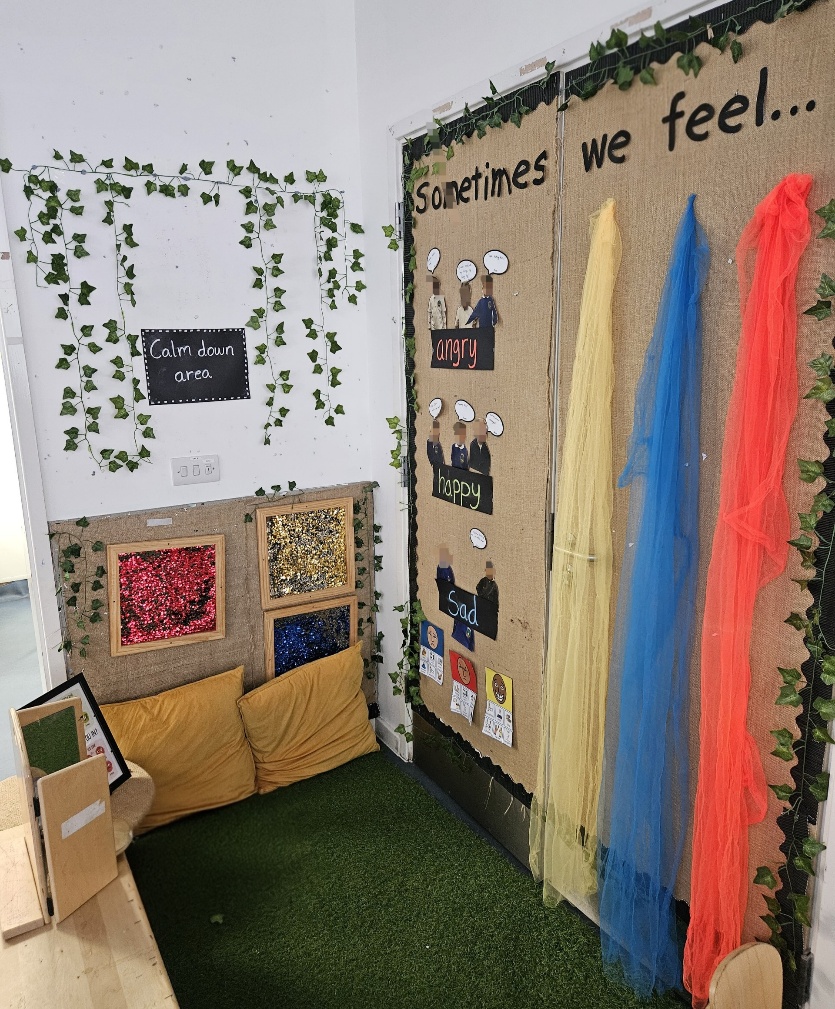
  • Nurturing and inclusive environment were created, such as calming spaces (that children could use to regulate their emotions)

Which children benefited from the Attachment Aware school approach?

Schools have a statutory duty of care to support CLA by the Designated Teacher and supported through the Virtual School. Although, a key aspect of Attachment Aware Schools is to support the needs of CLA the research found the scope of children who could benefit from such an approach was wide ranging.  The research found that children who were anxious, have special educational needs or who were described as shy also benefited from the approach.

Another Designated Teacher stated the wider benefits:

“I do think that Attachment Awareness helps because if children aren’t emotionally ok, they’re not gonna learn”.

Did the research identify any potential barriers?

Potential barriers identified through this research in implementing the approach ranged from:

  •  Training e.g. the time taken to train staff, embed the new approach and train staff due to staff turnover.
  • Some staff found that the approach was counter to how they may have been raised and so there was some cognitive dissonance between the relational based approach and the punitive approach that they were more familiar with. However, once staff saw the difference that the approach could make to children displaying challenging behaviour, they were then more likely to use the approach.

How does this research fit within similar research in this area?

Research in this area is growing and provides noteworthy evidence of wide-ranging improvements. Some larger scale studies have illustrated positive improvements:

Rose and Gilbert (2017) conducted a large-scale study involving 40 schools over 2 years. This research provided hard and soft indicators of improvements ranging from increases in academic performance, staff confidence and increase self-regulation of students. 

  • Academic improvements in reading, writing and Maths,
  • Increase in attendance,
  • Improvements in staff-wellbeing; in relation to an increase in staff confidence in responding to challenging behaviour and staff becoming more reflective in their practice.

Kelly (2020) involved 77 educational establishments (primary, secondary, specialist and Pupil Referral Units). Evaluation from the research suggests all participating schools had a positive impact by for example developing ethos change within the schools and more informed pedagogical practice to support Children who are Looked After and other vulnerable learners. 

Additionally, the Alex Timpson Attachment and Trauma Aware Programmes in Schools (2022) reviewed the impact of training from 305 schools across 26 Local Authorities.  Some of the findings highlighted, a reduction in the use of sanctions, a positive impact on students, and increase in staff awareness of how behaviour e.g. how behaviour displayed relates to the child communicating a need. 

How can I get my school involved in something similar?

  • Attachment Aware Schools are a whole school approach. It is important that everyone is on board with the aims of using such an approach. Raise awareness within the school and speak to the head teacher about potential benefits of using such an approach. 
  • Schools can contact their local Educational Psychology service or Virtual School for more information to find out how the approach is being delivered within their local area.