Categories
resource

Insights into creating an Attachment Aware School 

The article below discusses the benefits and impact on becoming an Attachment Aware school based on Amy’s doctoral research thesis titled: An Exploration of the Views and Experiences of Designated Teachers in Creating an Attachment Aware School. To view the thesis in more detail please click here:

An exploration of the views and experiences of Designated Teachers in helping to create an Attachment Aware School | BPS

What was your research about?

During the pandemic 5 primary schools in southwest London took part in a pilot project to become Attachment Aware schools.  The Designated Teachers (responsible for children who are looked after CLA) played a key role in facilitating the project. The Designated Teachers were all interviewed at the end of the year to reflect on their views and experiences. Key themes emerged from analysing the interviews (using Interpretative Phenomenological Analysis).

What is an Attachment Aware School?

An Attachment Aware school is a school that takes a relational approach to supporting its students. This type of school is often supported by Educational Psychologists and Virtual schools in order to create systemic changes to support children and young people who may have experienced trauma or disruptions to forming secure attachments, such as CLA. Many Local Authorities have some version of this approach although terminology used may vary such as Trauma informed Practice (TIP), Attachment Aware Schools (AAS) etc.

What motivated schools to become an Attachment Aware school?

  • A desire to support the needs of children in the school (the project took place at the start of the pandemic and so there was an increase in mental health needs).
  • It’s free, there was no cost to schools.
  • It fitted in with the ethos of the school and other relational approaches used.
  • A desire to learn evidence-based approaches. 

One of the Designated Teachers stated:

“The main thing for us was to…to help with any behaviour issues and to make sure that we’re approaching it in a way that dealt with the initial underlying problem rather than just firefighting…”

How did the Attachment Aware Schools approach develop within the schools? 

Schools worked over the year to develop systemic and environmental factors. Schools developed behaviour policies, transformed the environment (to create accessible calm spaces), provided staff with training based on trauma and attachment theory as well as developed restorative approaches to responding to behaviour.

What were some of the changes that occurred in the schools after becoming an Attachment Aware School?

The Designated Teachers reflected on physical/environmental and systemic changes that were occurred:  

  • The attitude of staff towards children, resulting in improved relationships and behaviour.
  • Changes in children’s interactions (with their peers) and staff,
  • Improved relationships between the schools and parents/carers
  • Nurturing and inclusive environment were created, such as calming spaces (that children could use to regulate their emotions)

Which children benefited from the Attachment Aware school approach?

Schools have a statutory duty of care to support CLA by the Designated Teacher and supported through the Virtual School. Although, a key aspect of Attachment Aware Schools is to support the needs of CLA the research found the scope of children who could benefit from such an approach was wide ranging.  The research found that children who were anxious, have special educational needs or who were described as shy also benefited from the approach.

Another Designated Teacher stated the wider benefits:

“I do think that Attachment Awareness helps because if children aren’t emotionally ok, they’re not gonna learn”.

Did the research identify any potential barriers?

Potential barriers identified through this research in implementing the approach ranged from:

  •  Training e.g. the time taken to train staff, embed the new approach and train staff due to staff turnover.
  • Some staff found that the approach was counter to how they may have been raised and so there was some cognitive dissonance between the relational based approach and the punitive approach that they were more familiar with. However, once staff saw the difference that the approach could make to children displaying challenging behaviour, they were then more likely to use the approach.

How does this research fit within similar research in this area?

Research in this area is growing and provides noteworthy evidence of wide-ranging improvements. Some larger scale studies have illustrated positive improvements:

Rose and Gilbert (2017) conducted a large-scale study involving 40 schools over 2 years. This research provided hard and soft indicators of improvements ranging from increases in academic performance, staff confidence and increase self-regulation of students. 

  • Academic improvements in reading, writing and Maths,
  • Increase in attendance,
  • Improvements in staff-wellbeing; in relation to an increase in staff confidence in responding to challenging behaviour and staff becoming more reflective in their practice.

Kelly (2020) involved 77 educational establishments (primary, secondary, specialist and Pupil Referral Units). Evaluation from the research suggests all participating schools had a positive impact by for example developing ethos change within the schools and more informed pedagogical practice to support Children who are Looked After and other vulnerable learners. 

Additionally, the Alex Timpson Attachment and Trauma Aware Programmes in Schools (2022) reviewed the impact of training from 305 schools across 26 Local Authorities.  Some of the findings highlighted, a reduction in the use of sanctions, a positive impact on students, and increase in staff awareness of how behaviour e.g. how behaviour displayed relates to the child communicating a need. 

How can I get my school involved in something similar?

  • Attachment Aware Schools are a whole school approach. It is important that everyone is on board with the aims of using such an approach. Raise awareness within the school and speak to the head teacher about potential benefits of using such an approach. 
  • Schools can contact their local Educational Psychology service or Virtual School for more information to find out how the approach is being delivered within their local area.
Categories
resource

Supporting children through bereavement 

Becoming withdrawn, having emotional outbursts, difficulties sleeping, feeling unwell and changes in appetite are all common responses after experiencing a bereavement. 

As adults, our natural response is to try and make things better for young people and take away these uncomfortable feelings. But grief is a natural part of life and it is important that young people are able to process the loss they have experienced with the support of the adults around them. 

So how can we support children through bereavement? 

1. Listen, empathise and allow space for children to ask questions – Listen to the child or young person and validate their emotions. Avoid trying to fix things or make things better. Remind the child or young person that it is normal and okay to feel sad or angry. 

2. Use clear language when talking about death – children often interpret information literally so using phrases such as ‘they are in a better place’ or ‘passed away’ can be confusing. Although it can feel difficult, research shows that it is helpful to use clear language such as ‘death’ and ‘died’. For younger children, we might explain that ‘their body stopped working’. 

3. Encourage the child or young person to talk about the person who has died – we sometimes avoid talking about the person who has died because it feels painful, but this can be a helpful way of processing the loss. Ask the child or young person questions about the person who has died e.g. ‘What was your favourite thing to do together? What is your favourite memory?’ 

4. Support the child or young person to continue engaging in important activities and connecting with others – maintaining a sense of routine and stability can be helpful during times of change and during a bereavement. Where possible, support the child or young person to continue engaging in activities they enjoy. Sometimes children or young people experience guilt when they have moments of feeling happy after a bereavement. Remind the child or young person that it is okay to feel happiness and enjoyment even though something sad has happened. 

5. Be sensitive and non-judgmental to differing cultural, religious and spiritual beliefs – ask children and young people what has been discussed at home and what their beliefs are. Explain that everybody has different beliefs about what happens after death and that there is no right or wrong. 

Developmental understanding of death

StageAge RangeConceptualisation
13 – 5Death is not a permanent condition. The dead are less alive – similar to being very sleepy, i.e. they can still breathe and eat.

The dead may wake up after a while. A dead person can come back to life.
25 – 9Death is final. The dead stay dead. Death is irreversible but not inevitable. There is the possibility of escaping from death if one is clever or lucky.

Some children at this stage of development picture death in the form of a person: sometimes an angel, a clown, shadowy death-man, or skeletal figure. Moving things are viewed as alive and non-moving as dead. Only bad people or people who have accidents die.
310+A more realistic, adult like view of death emerges. Death is not only final, but it is also inevitable, universal, and personal. Everybody dies, whether mouse or elephant, stranger or parent. No matter how good or clever or lucky. 

Helpful books for talking about loss:


Badger’s Parting Gifts
Susan Varley

Badger is so old that he knows he must soon die, so he does his best to prepare his friends. When he finally passes away, they are grief-stricken, but one by one they remember the special things he taught them during his life. By sharing their memories, they realise that although Badger is no longer with them physically, he lives on through his friends.

Lost in the Clouds
Tom Tinn-Disbury


Billy misses his mummy very much. She lives in the clouds. Some days the sun is shining and Mummy’s clouds are nowhere to be seen. Those are Billy’s favourite days. He and Daddy would play in the garden all day long, and Billy knows that Mummy is letting the sun shine for them. But not all days are like that. Sometimes Mummy’s clouds are dark, and Billy feels sad and alone.


Missing Mummy
Rebecca Cobb

Perfectly pitched text and evocative artwork explore the many emotions a bereaved child may experience, from anger to guilt and from sadness to bewilderment. And importantly, the book also focuses on the positive – the recognition that the child is still part of a family, and that his memories of his mother are to be treasured.


Ollie the Octopus
Dr Karen Treisman

In a magical underwater forest lived a colourful and loveable Octopus called Ollie, who loved swimming with his friends and spending time with his mum and dad, Orla and Orson the Octopuses.  Until one day, Orla started to get very sick. The doctors did everything they could to help her, but very sadly, Orla died.


The Invisible String
Patrice Karst

Does everybody have an Invisible String? How far does it reach? Does it ever go away? This heartwarming picture book for all ages explores questions about the intangible yet unbreakable connections between us, and opens up deeper conversations about love.

Categories
resource

Masking in autistic young people 

Masking is defined as the efforts made by individuals to minimise the appearance of differences. Similar to autism, masking lies on a spectrum, with great variation between autistic young people both in strategies used, and the extent to which they do mask. 

What does masking involve, why does it occur and what are the consequences?

For the autistic young people that are masking, research tells us that this can involve hiding emotions (happiness, sadness, anxiety), suppressing anything that might suggest they are different (sensory differences, motor difficulties, academic difficulties), copying or mimicking voices, and, in some cases, either suppressing or completely changing parts of their personality in order to present as ‘more’ neurotypical.  

Autistic young people may engage in masking as a response to negative social experiences, such as bullying, and the fear of being judged as different or strange, which in part may result from having a stigmatised diagnostic label. 

Autistic young people also report masking as a strategy to fit in and be ‘more’ neurotypical, something which may inadvertently be exacerbated by social skills interventions. Interventions that focus on improving specific social skills (e.g., eye contact) may indirectly perpetuate a harmful narrative which suggests that the way autistic young people communicate is not ‘correct’ and that they should change their communication style to ‘fit’ in, leading to further attempts to mask.  

While masking can lead to short-term success in social situations, it often results in exhaustion/ autistic burnout, identity loss, and has been linked with school avoidance as well as mental health issues such as depression and anxiety. In addition, due to hiding difficulties. those who mask a lot more are more likely to be missed or considered less needy of support by school and support services.

Do all autistic young people mask?

Research highlights that not all autistic young people engage in masking. For those that don’t, what appears to make the difference is having an absence of negative social experiences (e.g., bullying) and having supportive family, school environments and friends who provide them with instances (not always) where they can feel able to be themselves. In particular, research shows that the freedom for an autistic individual to be themselves, is more likely to occur when they have opportunities to interact with other neurodivergent individuals. 

So, what can you as a school do? 

Understanding & Support
Masking for autistic young people has an important function and is very often used for completely valid reasons. As parents and teachers, the goal should not be to remove or stop masking, but instead to understand its causes and try to support and target these (e.g., bullying, stigmatized label).

Social Networks
Positive social experiences and friendships appear to have a significant protective role. Therefore, schools should try to consider whether those who are masking have social networks, and in particular, neurodivergent networks, and if not, try to build these. This could involve setting up lunchtime clubs based on autistic young people’s interests or STEM clubs based on the same. Importantly involving autistic young people in the creation of these clubs may be key for their success. 

Language & Labels
Another driver of masking is a feeling of difference. This, in part, derives from being diagnosed with a label that frames symptoms in terms of dysfunction and impairment. Schools should, therefore, consider the language they use around autism and consider adopting a neurodivergent model where traits such as social communication difficulties are instead recognised as social communication differences.”

Praise
Be mindful of praising what appear to be social skills more in line with a neurotypical way of communicating. Instead focus on praising autistic young people’s bravery to share their experiences of being autistic in a neurotypical world and their openness and general efforts to communicate. 

Assess
Masking is a part of typical adolescent development, utilised by humans to navigate social situations and form positive impressions. It is, therefore, important to ensure that we consider the extent to which autistic young people are masking and whether or not this is severe, leading to harmful consequences.

LEANS Approach
Many autistic young people report experiences of bullying and victimisation, suggesting this is often a big reason for masking. Schools should, therefore, seek to improve other pupils’ understanding of and approach to difference. The LEANS approach is a free resource for teaching pupils about difference through a neurodiversity lens Learning About Neurodiversity at School (LEANS) | Salvesen Mindroom Research Centre (ed.ac.uk)

Self Understanding
It will be important to consider the extent to which any social skills interventions are inadvertently encouraging or emphasising ‘neurotypical’ ways of communicating. Instead of focusing on improving specific skills, social skills interventions should focus on supporting autistic young people to reflect on social situations and develop a deeper understanding of their own and others thoughts and feelings. 


Categories
resource

Supporting Cognitive Skills

Dynamic assessment (DA) is an area of EP work that is less known to schools but can be incredibly valuable in revealing ways that a child can learn best and the type of support/ mediation they would require to further develop their thinking skills and perform at their best. 

Dynamic assessment approaches (unlike static intelligence tests) are built on the belief that one can learn far more about a child’s cognitive development, and any barriers to their learning, by working with the child in a dynamic and facilitative way as opposed to assessing their unassisted performance and compare it to an age-related norm. Dynamic assessment approaches analyse learner’s cognitive skills of a learner in relation to the task at hand and identify where meaningful input is needed to optimise performance. 

There are ways school staff can use principles of dynamic assessment to scaffold learning. One basic element of DA is analysing where a learner’s struggle may be by breaking down the cognitive skills required in any given task into three areas:

INPUT
finding out what you need to do

  • Focused perception: using our senses (listen, smell, see, taste and touch) to get information
  • Systematic exploration: using a plan (system) so we do not miss or skip anything important
  • Labelling: Finding the names of objects and ideas
  • Find out where (spatial positions) and when (time, sequence and order)
  • Constancy: observing what stays the same when some things seem to change
  • Considering several sources of information: being able to use more than one idea at a time
  • Precision and accuracy: being careful when it matter

ELABORATION
processing information and problem solving

  • Defining the problem: knowing what we are asked to do 
  • Relevance: using only the information we need 
  • Interiorisation: holding a picture in our mind of what we must do 
  • Planning and sequencing the task: planning our steps
  • Working with several pieces of information: keep all the facts in mind 
  • Comparing: telling what is the same and what is different 
  • Categorisation: being able to put objects and ideas into groups based on their similarities and differences
  • Making links and relationships: finding out how things go together
  • Using concepts of space and time: finding where things belong and in what order
  • Developing hypothetical thinking and considering alternatives: thinking things out in our heads and then choosing.
  • Using logical reasoning: proving our ideas

OUTPUT
communicating the product of our thinking

  • Controlling impulsivity, reducing trial and error responses: thinking before we answer and do not rush
  • Reducing egocentric communication: expressing things clearly
  • Overcoming blocking: if we ‘know’ the answer but can’t express it right away, we wait and try again.

It is very common for children to appear unable to access a task because of difficulties in the input phase or because they have trouble presenting the product of their thinking. Analysing and supporting cognitive skills such as systematic planning, improving speed and accuracy as well as thinking about what is needed as the end product before launching into action, may be a very useful focus for school intervention / LSA support. There are ways to support these skills through every day activities and with good scaffolding questions such as:

“Where shall we start? What should we look at, first or second?”

“If you were to plan your trip to a supermarket, what system would you use? How can you do the same for this maths problem, piece of writing etc?” 

If you would like more ideas of how to support the development of cognitive skills (alongside curriculum support you are already providing), please do not hesitate to contact our service. We can offer dynamic assessment input for individual children as well as training for support staff in using DA principles in their every day practice. 

Categories
resource

Thinking about Autism and Girls

By Dr. Rose McGeown

Recent large-scale research has found that in the UK around 1 in 57 children are on the autistic spectrum, with around four boys being diagnosed for every one girl (4:1)[i]. Autism has long been thought to be much more prevalent in males than females, but new research suggests that the prevalence in females may be much higher than we previously thought[ii].

When considering the presentation of autism in girls and women, it is important to note that the key diagnostic criteria for autism remains true: Autism is a neurodevelopmental condition characterised by:

  1. Persistent difficulties in social communication and social interaction across multiple contexts
  2. Restricted, repetitive patterns of behaviour, interests or activities

However, what research is now telling us is that there are some key gender differences in the presentation of autism when comparing male and female individuals. Autistic females appear to present with more subtle difficulties and can appear more similar to their neurotypical peers[i]. This is leading to many girls having their needs inaccurately identified and missing out on timely support.

Difficulties with social communication and interaction

Research has shown that autistic girls have a greater need for social contact and interaction with peers[i],[ii]. They tend to form meaningful friendships and enjoy spending time with peers at social times in the school day. However, looking closer at these relationships may highlight some key challenges. For example, autistic girls are more likely to be on the periphery of social groups, may be more passive and struggle with initiating social interactions, have higher rates of conflict management and be more at risk of social isolation at school.

Research has also found that autistic girls are more likely to engage in ‘camouflaging’ behaviours, which enable them to present with superficial social skills and mask (or hide) their autistic differences[i]. This means that although many autistic girls may have learnt how to appear more sociable through observing and copying their peers, as social skills become more advantaged and nuanced, many autistic girls experience increased challenge due to their underlying social communication needs. The impact of this can be feelings of overwhelm, fatigue and emotional dysregulation, which are often internalised or only seen at home[ii].

Restricted, repetitive pattern of behaviour, interests or activities

Similarly, differences with restricted and repetitive patterns of behaviours, interests or activities can be much more subtle for autistic girls[i]. Autistic girls tend to have typical interests for their age e.g. animals, music, books, TV series, art and drama etc., but the intensity of this interest is atypical. For example, they may want to talk about their special interest for long periods of time, favour their special interest over social interaction or begin to identify as a character they are interested in. Repetitive patterns of behaviour, or ‘stimming’, whereby an individual engages in repetitive movements to regulate themselves may also be more subtle in girls e.g. twirling their hair, shaking their leg, playing with a piece of blue tac in class, meaning that for teachers to notice that this child is feeling dysregulated is tricky.

How staff can support autistic female pupils at school

  • Be aware of gender differences in autism and look out for more subtle social communication differences in girls
  • Provide timely support for autistic female pupils in school
  • Provide explicit teaching of social skills and conflict management skills
  • Engage pupil’s special interests for motivation
  • Support emotional regulation throughout the school day
  • Support sensory differences within the school environment
  • Display positive female autistic role models in school
  • Maintain good communication between home and school
  • Discuss individual pupils who you are concerned about with your link Educational Psychologist

References

i Roman-Urrestarazu, A., van Kessel, R., Allison, C., Matthews, F. E., Brayne, C., & Baron-Cohen, S. (2021). Association of race/ethnicity and social disadvantage with autism prevalence in 7 million school children in England. JAMA pediatrics, 175(6), e210054-e210054.

ii Loomes R, Hull L, Mandy WPL. (2017) What Is the Male-to-Female Ratio in Autism Spectrum Disorder? A Systematic Review and Meta-Analysis. J Am Acad Child Adolesc Psychiatry.

iii Russell, G., Steer, C., & Golding, J. (2011). Social and demographic factors that influence the diagnosis of autistic spectrum disorders. Social Psychiatry and Psychiatric Epidemiology, 46(12), 1283–1293.

iv Cridland, E. K., Jones, S. C., Caputi, P., & Magee, C. A. (2014). Being a girl in a boys’ world: Investigating the experiences of girls with autism spectrum disorders during adolescence. Journal of autism and developmental disorders, 44(6), 1261-1274

v Sedgewick, F., Hill, V., Yates, R., Pickering, L., & Pellicano, E. (2016). Gender differences in the social motivation and friendship experiences of autistic and non-autistic adolescents. Journal of autism and developmental disorders, 46(4), 1297-1306.

vi Allely, C. S. (2019). The female phenotype of autism spectrum disorder: The ‘camouflage’hypothesis. Editorial Board Members.

vii Baldwin, S., & Costley, D. (2016). The experiences and needs of female adults with high-functioning autism spectrum disorder. Autism, 20(4), 483-495.

viii Sutherland, R., Hodge, A., Bruck, S., Costley, D., & Klieve, H. (2017). Parent-reported differences between school-aged girls and boys on the autism spectrum. Autism, 21(6), 785-794.

Categories
resource

 The importance of father inclusion in schools

Fathers have an impact upon the child’s cognitive, emotional, social and physical development (Allen & Daly, 2002).

Kim and Hill (2015) found in a meta-analysis of studies found that despite mothers having higher mean levels of involvement in their child’s education,fathers also equally showed a strong positive association for their involvement and their child’s academic achievements.

Fathers who are nurturing in their roles tend to have children with higher cognitive and receptive languagescores(Dubowitz et al., 2002) and fewer behavioural needs (Cooley & Unger, 1991).

 Jeynes (2015) found that across 66 studies, father involvement often yielded the largest effect sizes regarding positive outcomes for children of minority ethnic backgrounds. 

Inclusive practice for fathers in schools:

Child Protection
Ensure you are mindful of fathers’ rights when engaging in safeguarding issues. For example, consider what are the legal rights of fathers who may not live in the same home as their child? Do they retain parental responsibility? What are the legal parental arrangements?

Father Inclusive Schools
Foster an environment that acknowledges different types of family structures e.g., single fathers, same sex parents, fathers who are the main care-giver.

Contact 
Ensure fathers are included in all correspondence e.g., emails, letters and meetings, reports and exam results. Include fathers contact details in referral forms to outside agencies. 

Representation & Inclusion
Some research (Fetcheriet al. 2011)suggested that fathers are more likely to become involved in school activities if the facilitator is male. Are there ways in which we can be mindful of the gender ratio of staff and how we can include fathers to support school activities? What are the fathers’ skill set and how can you work collaboratively?

Accessibility
Allow for flexibility in meetings e.g., making use of online or hybrid models and adjusting timing to ensure fathers and working parents can attend. Use an interpreter for families where a father may have English as an Additional Language (EAL). Be mindful that fathers from other cultures may have different experiences of school engagement and may not be familiar with school systems. Continue to identify other barriers to involvement fathers may experience.

Other Resources

SOMETHING TO READ:
Father Friendly Schools -Fathers Network Scotland
www.fathersnetwork.org.uk

SOMETHING TO CONNECT WITH: www.fatherhoodinstitute.org

SOMETHING TO ENJOY: 
Fatherhood by Kevin Hart –Netflix 


Categories
resource

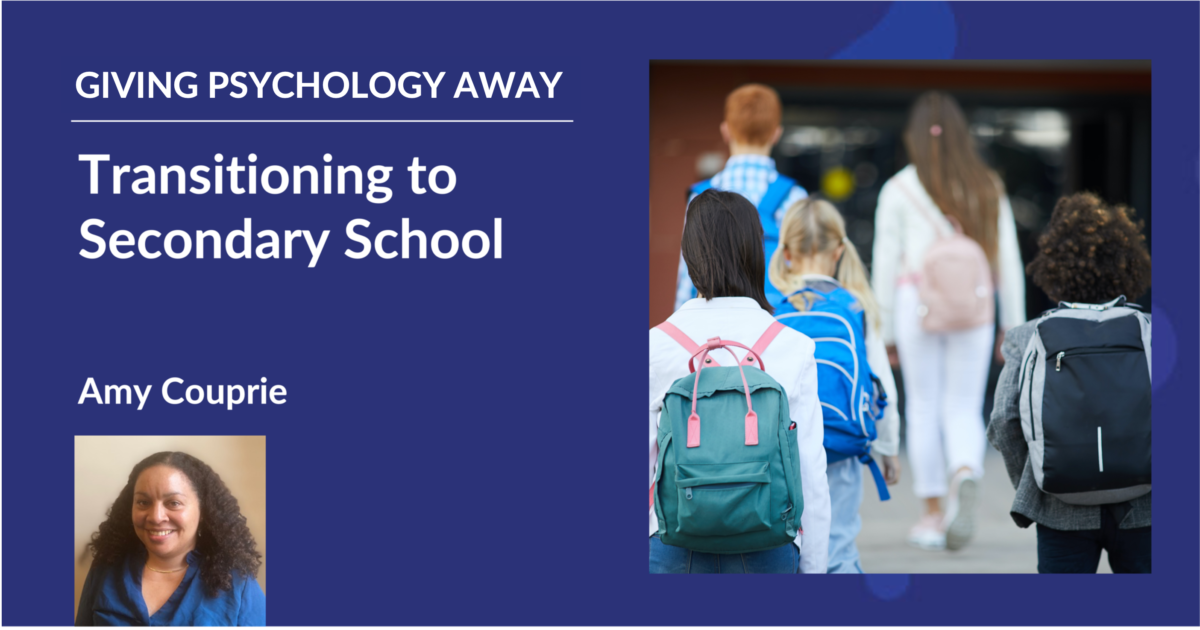
Transitioning to Secondary School

By Dr. Amy Couprie

Changes to this familiarity can bring about different feelings for different children, such as excitement, uncertainty, or fear. It is likely there will be a mix of emotions, possibly sadness at leaving primary school and excitement and/or fear at beginning secondary school.

A sense of security may be felt within some children knowing there will be some friends or peers attending the same school. These friendships may last but often children will make new friendships groups as they develop. Some common themes that arise from children who are transitioning to secondary schools are about:

How can Parents and Carers help?

Parents and Carers can play a key role along with schools to support their children with the transition to secondary school. Parents may benefit from a workshop on how they can help to prepare their child. Things they can do include:

  • Visiting potential schools with their child and gaining their views. They will have the opportunity to speak with current students to ask informal questions. Attending open days provide children with the ability to familiarise themselves with new staff, the building, locating different departments and toilets.
  • Planning the route and doing a few test runs so they become familiar with the route. It may be worth noting the stop if they are catching a bus or pointing out landmarks (e.g. take the road by the church on the corner). Apply for a free bus pass in advance if needed (as not all drivers will allow them on without one).
  • Ensure the child has got their full P.E uniform by the time they begin, some schools also hold second hand uniform sales.
  • Allow the child to take more responsibility for getting themselves up in the morning by setting an alarm, packing their own bag, getting their own breakfast. Many schools have electronic or cashless systems for school dinners, but it may be useful to practice buying their own food from a local café or shop in case they need to manage using cash.
  • Parents can also be anxious about the transition to secondary school some of this may depend on whether their child has got into their preferred school. It’s important to set aside their own views and feelings as children will absorb these feelings. Its important they start school with a happy mindset.

Supporting children with Special Educational Needs/Disabilities

Children with SEND may need additional support with the transition to secondary school depending on the individual needs of the child. Things to consider may include:

  • Sharing key information/ SEND support plans/ EHCPs with the SENDCo or inclusion – This will help the school to prepare arrangements such as preparation for placing additional staff or resources.
  • Considering transport arrangements.
  • Some children may require a phased entry where the child or young person goes for a few hours a day or some days during the week to begin with. Some schools provide activities over the summer prior to beginning to help with a phased entry.
  • Create a Social Story to help them know what to expect in their new school.
  • Some children may benefit from extra support with making friendships and so encouraging attending different fun activities or clubs the school may offer can help them to begin to feel more comfortable in different social environments and making new friendships. They may also benefit from role-playing different social situations.
Categories
resource

Supporting EBSA and Autism

By Dr. Mollie Higgins

In addition to the general risk factors for EBSA, autistic young people experience a number of differences which further increase their feelings of anxiety in the school environment.

  • Differences in identifying and describing their own and others’ emotions
  • Emotional regulation difficulties
  • Differences in sensory processing and finding the sensory environment overwhelming e.g. loud corridors, different smells, busy classrooms
  • Difficulties understanding and predicting social situations and managing interactions with others
  • Worries around change or transitions e.g. moving between classrooms, changes to timetables, supply teachers
  • Executive functioning and organisation difficulties – remembering books, homework, equipment
  • Masking – try to ‘fit in’ or attempting to appear more neurotypical by changing their behaviour and internalising any anxiety
  • Experiencing performance anxiety related to the schoolwork or exams
  • Rigid or inflexible thinking about school

These challenges mean that some autistic students try and manage their anxiety by avoiding school altogether. When we avoid something, our anxiety immediately reduces, but it makes it more difficult to attend school in the future. An important way of supporting attendance is speaking with students directly to hear their views and opinions about what might reduce their anxiety and help them attend school.


Ten autistic secondary-age students were asked to describe the best type of school and the worst type of school. This technique is known as The Ideal School and is based on Personal Construct Psychology. Five key themes were identified and the key points are summarised below:

#1: There is limited choice
Students described a lack of choice over decisions at school and felt decisions were always made by adults. There was a sense that nothing could change about school as students perceived themselves as having limited autonomy. Despite this, participants hoped for increased choice over their school experiences and described an ideal school where they were involved in the decision-making. Opportunities for increased autonomy including freedom to take a break from a lesson, as well as choice over their preferred style of lesson and which peers they work with.

#2: Relationships are key
Relationships with staff and other students had a significant impact on school experiences. Students wanted support from adults who were understanding and listened to their views, as well as opportunities to engage with like-minded peers who were keen to learn. Key to developing understanding and trusting relationships was the importance of staff learning more about autism.

#3: The need for a comfortable school environment
Students hoped for a physical school environment that supported their sensory and emotional needs. They preferred a school environment that was not sensorily overwhelming, had unlimited access to separate spaces, newer resources and facilities and opportunities to spend more time in nature and with animals.

#4: Seeking adjustments for individual needs
Students described specific adaptations that would help meet their needs in school, including increased flexibility, reduced pressure and expectations and an adapted and personalised teaching and learning environment. This included teachers reconsidering the value of homework and adjusting expectations based on individual needs.

#5: A hope for change
All students wanted to attend school! This suggests that autistic students experiencing EBSA are often motivated to learn and attend, but they were clear that they needed a school that understood them and was able to meet their needs.


How can schools help?

The following ideas for adjustments were suggested by autistic young people. Which adjustments has your school already implemented? Which other adjustments could you make within your school?

Autonomy and student voice:

  • Actively listen to students’ views, opinions and ideas
  • Involve students in decisions that affect them e.g. the school uniform policy, style of lessons, individual vs group work, how school is decorated, the lunch menu, the subjects they take.
  • Allow students some autonomy over their day e.g. use of an exit card or time in a separate space when students identify a need.
  • Encourage an environment where students can speak freely and feel comfortable asking for help by promoting open discussions and responding to their ideas without judgment.
  • Aim to reduce power imbalances between students and staff by valuing students’ input and ideas.
  • Aim for fair and reasonable rules that take into consideration the views and needs of all students.

Adjustments to meet individual needs:

  • Consider the purpose and amount of homework set for students.
  • Create opportunities for breaks throughout the day including use of a separate calm room.
  • Consider sending work home if a students is absent, without expectation for completion.
  • Consider the appropriateness of detentions and other consequences on a case-by-case basis.
  • Embed more creative, engaging, interactive lessons that actively involve students in their learning.
  • Ensure key information is clearly explained using visuals.
  • Check whether students have understood the task.

The school environment:

  • Consider the sensory needs of students including reducing the noise level, allowing use of a separate space and allowing students to leave lessons earlier to access quieter corridors.
  • Create opportunities for background music and adjustable lighting.
  • Consider adaptations to the school uniform to meet sensory needs.
  • Create separate calm rooms away from the classroom that are designed and decorated collaboratively with students.
  • Consider increased access to green space e.g. lessons outside.
  • Consider whether there are opportunities for students to have access to animals at school.
  • Aim to create a bright, welcoming environment with students’ work on display.
  • Where possible, provide access to facilities such as libraries, science laboratories and sporting activities.

Strong relationships:

  • Prioritise a relational approach across the school.
  • Ensure staff understand the value of positive relationships with students.
  • Avoid shouting, raised voices, using sarcasm or publicly questioning absence in front of students.
  • Ensure staff treat all students with respect and understanding.
  • Create opportunities for students to spend time with peers e.g. at break and lunch time and in group work and discussions.
  • Ensure lessons are tailored to students’ interests where possible, to increase motivation and their ability to support one another with learning.
  • Facilitate conversations relating to difference to encourage tolerance and acceptance amongst students.
  • Ensure clear and reasonable boundaries are maintained by staff.
  • Avoid stereotyping, labelling or grouping autistic students together.
  • Seek opportunities for staff to engage with training relating to SEN and ASC.

For further support with gathering pupil voice, making suitable person-centred adaptations, or individual support plans for increasing pupil attendance, please contact your link EP.